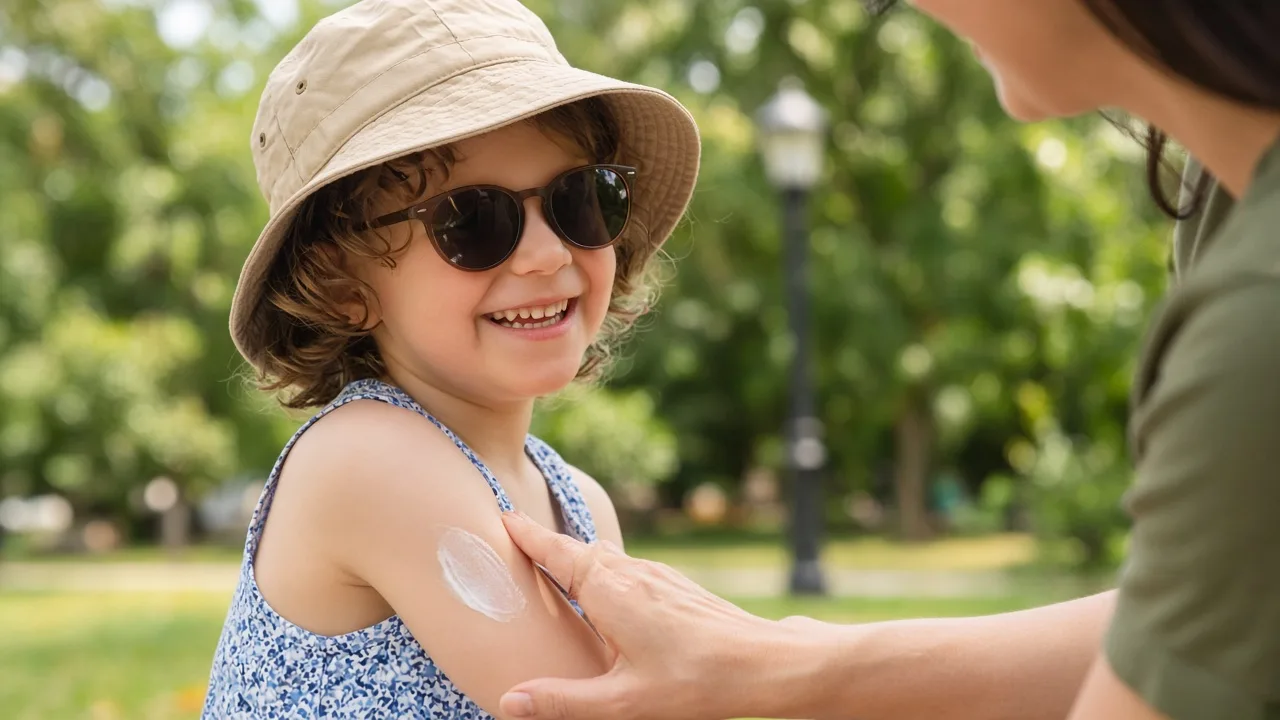

Children love to play outdoors, and time in the fresh air has many benefits. But childhood sunburns increase the risk of skin damage later in life, so protecting skin from the sun is an important part of healthy habits. A few simple practices can make sun safety routine for the whole family.
Why It Matters
Ultraviolet radiation from the sun damages skin cells. Repeated sunburns in childhood and adolescence are associated with a higher risk of skin cancer later on. Sun protection is needed year-round, not only at the beach, because UV rays reach the ground even on cool or cloudy days.
Seek Shade and Plan Around Peak Hours
UV exposure is strongest in the middle of the day, often between about 10 a.m. and 4 p.m. Plan outdoor play in the early morning or late afternoon when possible, and use trees, umbrellas or shade structures at other times. Remember that shade does not provide complete protection, so combine it with other measures.
Cover Up
- Choose lightweight clothing that covers arms and legs. Some fabrics are labeled with a UPF rating, which indicates how much UV they block.
- Use a wide-brimmed hat that shades the face, ears and neck.
- Provide sunglasses that block UV rays to protect the eyes.
Choosing and Using Sunscreen
- Pick a broad-spectrum sunscreen with SPF 30 or higher that protects against both UVA and UVB rays.
- Mineral sunscreens containing zinc oxide or titanium dioxide are often recommended for sensitive skin.
- Apply it generously about 15 minutes before going outside, and cover exposed areas, including ears, the back of the neck, feet and the tops of the hands.
- Reapply at least every two hours and after swimming or heavy sweating, even if the product is labeled water-resistant.
- Check the expiration date, and store sunscreen out of direct heat.
Babies Under Six Months
The American Academy of Pediatrics advises keeping babies younger than six months out of direct sunlight and using shade and protective clothing. If adequate clothing and shade are not available, a small amount of sunscreen on exposed areas such as the face and hands may be used. Talk to your pediatrician for guidance.
Watch for Heat and Hydration
Sun exposure often goes together with heat. Offer water frequently, encourage breaks in the shade and recognize the signs of overheating, such as flushed skin, tiredness, headache or dizziness. Never leave a child in a parked car.
Set a Good Example
Children copy what adults do. Wear a hat, use sunscreen and seek shade yourself. Make sun protection part of the routine just like buckling a seat belt, and teach older children to apply and reapply their own sunscreen.
School, Sports and Water Play
Ask about sun-safety policies at your child's school, camp or sports program, including permission for sunscreen and hats at recess. Pack sunscreen in the sports bag and make reapplication part of the break routine. Water and sand reflect UV rays and can increase exposure, so consider UV-protective swim shirts for long beach or pool days. Check the daily UV index in the weather forecast, and take extra care when it is high.
If a Sunburn Happens
Cool the skin with a cool bath or compress, give fluids and use a moisturizer. Seek medical help if there are blisters over a large area, fever, severe pain or signs of dehydration. This article provides general information and does not replace advice from your child's healthcare provider.

Comments are closed.